

Nagoya 2026 Lower Division Review
With the July sumo tournament well behind us, we can look at what happened below Makuuchi.

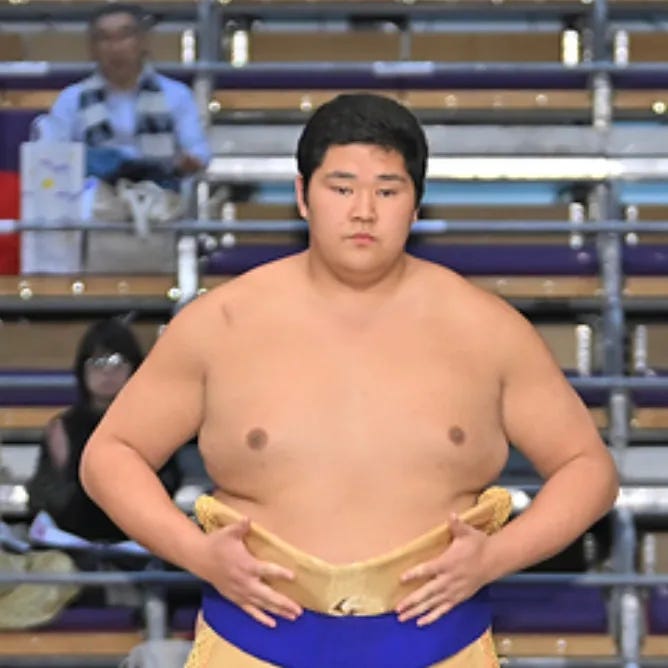
This site tends to hyperfocus on the top division during each basho, as running the game and writing recaps takes most of the time during a tournament. There was enough drama in Makuuchi to keep track of. The Yokozuna competed most of the basho, but were clearly struggling. Shishi and Kotoieho each threatened a Maegashira yusho. In the end, there was a three-way playoff with only Sanyaku wrestlers. Soon-to-be-Ozeki-again Aonishiki toppled recently re-promoted Ozeki Kirishima and Isegahama Ozeki hopeful Atamifuji.
This is my regular makeup piece after only looking at the bottom five divisions out of the side of my eye for fifteen days. A yusho is a yusho, but lower division yusho do not always betoken a great future. Sometimes it’s a career highlight. But a lower division championship still means the wrestler was better than the dozens of other guys in that division for two weeks. And if you like Isegahama wrestlers in playoffs, the lower divisions delivered for you in Nagoya as much as Makuuchi.
Here is what took place in each of the lower divisions in July.
Juryo
Lone Juryo debutant Arashifuji (one of three Isegahama men in the second division in July), looked like he would blitz the division. He started off 10-1, with a sole Day Eight loss to Nishinoryu–who was otherwise having a disastrous tournament–by inadvertent step out. Then Arashifuji lost three straight. He was tied on 10 wins going into Day Fourteen with former Makuuchi wrestler Shonannoumi. Behind them were Asasuiryu, Toshinofuji, Dewanoryu, and Shirokuma on 9 wins. On Day Fourteen, Arashifuji, Dewanoryu, and Shirokuma all lost. On Day Fifteen, Shonannoumi lost while Asasuiryu, Toshinofuji, and Arashifuji all won.
So there was a four-way playoff for the second division title. Shonannoumi and Asasuiryu battled in the first playoff match, with Shonannoumi taking the match by slapdown. Then Toshinofuji battled Arashifuji in the all-Isegahama playoff. Since they are stablemates, this was a first ever meeting thanks to qualifying for a playoff. It’s a double-stable matchup. Toshinofuji joined sumo with Miyagino stable under the former Hakuho as Seihakuho and Arashifuji joined Miyagino under his family name Matsui. Both wrestlers transferred to Isegahama after the Hokuseiho bullying scandal.
Toshinofuji won the former-Miyagino derby. That set up a Shonannoumi-Toshinofuji match for the Juryo yusho. Shonannoumi won with the simple yorikiri, earning his first ever yusho at any level. He may not get back to Makuuchi just yet. Shonannoumi has four rikishi ahead of him in the promotion queue: Asasuiryu, Tokihayate, Dewanoryu, and Toshinofuji. Everyone except Tokihayate in that group would be making a Makuuchi debut and is entering their prime. The rikishi with obvious demotion records in Makuuchi are Daiseizan, Kazuma, Onokatsu, and Mitakeumi. There will be no space for Shonannoumi and his track record doesn’t suggest he’ll necessarily make it back up.
Arashifuji, by contrast, will likely not spend much time in Juryo. He is 21 and a former Makushita Tsukedashi. His Makushita career was more better than average than dominant, but he’s come on in the last few basho. He was 10-4 in his last two Makushita basho, then just secured 11 in his sekitori debut.
Makushita
If you thought Juryo was wild in July, Makushita was a whole other level. Typically, Makushita gets a clean yusho winner without playoffs because the matches are scheduled based on record. Eventually, the undefeated rikishi face each other enough for someone to get a first loss before the fifteen days are up. Usually a playoff only occurs if two stablemates wind up at 7-0 in regulation because they can’t face each other.
Not so in Nagoya this year. Former Juryo man Nabatame was the only Makushita rikishi at 6-0 on Day 14. He had even handed heralded up-and-comer Asahifuji his first ever professional loss on Day 3. On the final Saturday, he was bumped up to Juryo to face struggling veteran Nishikigi. Nabatame lost. That put 7 rikishi at 6-1 for the basho, and created a wild playoff scenario.
First, March Makushita Tsukedashi Fudoho faced longserving Makushita veteran Hananoumi. Fudoho won by hatakikomi. Following that, Nabatame faced Asahifuji in a rematch of their previous encounter. This time Asahifuji was victorious with an okuridashi. Then Ryuho–a just turned 19 year old–beat former Juryo wrestler Mita. I’m sure you’ve all followed everything so far. In the next round, Asahifuji dispatched Fudoho with a yorikiri. Enter seventh playoff qualifier Wakamiyabi, as someone had to sit out a round with an odd number of wrestlers. He faced Ryuho, who was certainly a little more worse for wear, and Wakamiyabi won with a sukuinage.
This left Asahifuji-Wakamiyabi as the title decider. Asahifuji won a fourth straight lower division yusho with another yorikiri. Asahifuji’s career record officially stands at 27-1. He has also won 6 playoff matches in four basho, so he’s really 33-1. In fact, he seems destined for a playoff, as he’s had to win all four lowest-division yusho with extra sumo. He won’t get a chance at a yusho in a fifth division in September, because he didn’t make it to Juryo yet. A year to the top division still isn’t completely impossible, though, and he is in the strange position of being a locked on favorite to win the Makushita yusho for Aki.
The three rikishi making it up to Juryo are Nabatame, 20-year-old Arashio-beya rikishi Tanji, and slow climbing 23 year old Tokifudo. There’s a possibility they could all be Makuuchi rikishi in due course, although none of that trio feel like they’ll blast through the second division. It’s the slow-grinding nature of sumo on display. Asahifuji is the exciting name, but he has to wait because Nabatame, Tanji, and Tokifudo are ahead of him on the Banzuke.
Sandanme
Sandanme also had a playoff, although it had the more usual head-to-head battle between two undefeated rikishi. Tenshoyama was ranked Sandanme #3 East, so he scored five wins against Sandanme opposition and beat two Makushita wrestlers. In fact, Hananoumi and Mita both only lost to Tenshoyama, and if either had won those matches the previous section would have been much shorter. Those Makushita matches also meant Tenshoyama didn’t face Tochimusashi, who was at Sandanme #29 West. Tochimusashi is also a former Juryo yusho winner who is on his second injury recovery journey from the lower ranks.
And Tenshoyama easily beat him with a yorikiri. At any other time, Tenshoyama would easily be the hot-shot prospect everyone is watching. Instead, he’s climbing the Banzuke at the same time as Asahifuji. In fact, of his three career losses, two were to Asahifuji in his first two basho. (He lost to former Juryo wrestler Kiryuko in the third–and Kiryuko would be a Maegashira now if he could be healthy. Alas, he got hurt again in Nagoya.) He’s gone 25-3 in four basho.
Tenshoyama isn’t just a winner, but looks like something on paper. He is a Mongolian who went to Toyo University and stands at 197 cm (6’ 7.5”). He can wrap up anyone, and he knows how to work an opponent out. As a University man, he is already 22, but he probably won’t spend too long in Makushita or Juryo. As long as he isn’t facing Asahifuji, he should be favored in every match.
Jonidan
Jonokuchi was won in regulation by a rikishi going 7-0 against all comers. It’s nice to know that was possible in Nagoya 2026. The rikishi who earned 7 wins is fascinating, too. Hakugetsuro is a Mongolian graduate of Senshu University who debuted in May. He now has gone 14-0 in his two professional basho, and he is clearly way too good for the lowest divisions.
His ultimate future is limited by the fact he is already 24 and not very big. He still has a bright future. The list of back-to-back Jonidan and Jonokuchi winners is mostly future Maegashira. Since he is a University man and he’s won with 8 kimarite in 14 matches, expect more of an Ishiura or Enho future than a future Sanyaku mainstay. Still, having fun sekitori is always a good thing. Here’s hoping Hakugetsuro keeps it up on some level so we get to see his sumo in Makuuchi.
Jonokuchi
The lowest division was won by Kakizoe. Kakizoe is an 18 year old who was making his professional sumo debut in Nagoya. Currently, he is fighting under his family name. He is also the son of former Komusubi and seven-year Makuuchi veteran Kakizoe, who also obviously used the family name. The family moniker might stick with this one.
This new Kakizoe is also very, very fun. In his seven matches, he won twice with uwatedashinage and once with uwatenage. Apparently, he likes a throw. He also collected one win by hatakikomi, hikiotoshi, oshidashi, and yorikiri, so there’s some variety to his sumo. Interestingly, he also had a pretty stacked match card by Jonokuchi standards. He handed the only losses to Kiboho, Naniwamusashi, and Asahabataki. He also beat 5-2 men Shimabakuro and Chiyoaoi. All of those competitors are more typical lowest-divisiom champions, guys who have been ranked higher but fell down because of injury.
So keep an eye on Kakizoe. He could possibly be special and likely will be fun to watch.